


සුසැදි දෙසට හැරෙමු !
நேர்மையானதும் ஊழலற்றதுமானதேசத்தைநோக்கி !
Towards a Clean and Upright Country !







Online Complaints
Commission
 The Commission to Investigate Allegations of Bribery or Corruption was established by the Anti-Corruption Act (ACA) No. 09 of 2023 to provide for the establishment of an independent commission to detect and investigate allegations of bribery, corruption and offences related to the declaration of assets and liabilities and associated offences and institute prosecutions thereto. ACA gives effect to certain provisions of the United Nations Convention Against Corruption and other internationally recognized norms, standards, and best practices. Apart from that, ACA conducts prevention programmes to educate and raise awareness amongst the public to combat corruption. Morefully, ACA has repealed the Bribery Act No. 11 of 1954, the Commission to Investigate Allegations of Bribery or Corruption Act, no. 19 of 1994 and the Declaration of Assets and Liabilities Law no. 1 of 1975.
Latest News & Press Releases
Prevention Programme at Sri Lanka Ports Authority
22-04-2024 Prevention
The Commission to Investigate Allegations of Bribery or Corruption conducted a prevention programme on 25.03.2024 for 80 officers of the Sri Lanka Ports Authority and took place in the auditorium of the Mahapola Ports and Maritime Academy...
Read morePrevention Programme for Officers of the Urban Development Authority
22-04-2024 Prevention
The Commission to Investigate Allegations of Bribery or Corruption (CIABOC) conducted another important prevention programme on 14.03.2024 for officers of the Urban Development Authority. It marked the beginning of a series of programmes conducted for...
Read moreCausing financial loss to the government by fraudulent registration of uncleared vehicles
17-04-2024 News
Based on an information received, the Commission to Investigate Allegations of Bribery or Corruption initiated an investigation over the illegal registration of nearly 400 vehicles not cleared through Sri Lanka Customs. The registration has been...
Read morePrevention Programme at Ceylon Electricity Board
15-04-2024 Prevention
The Commission to Investigate Allegations of Bribery or Corruption conducted a prevention programme on 20.03.2024 for 100 officers of the Ceylon Electricity Board and took place in the auditorium of the Additional General’s Office complex...
Read moreCIABOC Prevention Unit Empowers Undergraduates of the University of Sri Jayewardenepura Against Corruption
11-04-2024 Prevention
The public debate jointly organized by the students of the Department of Criminology, University of Sri Jayewardenepura and the Commission to Investigate Allegations of Bribery and Corruption successfully concluded on 26.03.2024. The debate conducted under...
Read morePrevention Programme at Sri Lanka Ports Authority
11-04-2024 Prevention
The Commission to Investigate Allegations of Bribery or Corruption conducted a prevention programme on 12.03.2024 for 80 officers of the Sri Lanka Ports Authority and took place in the auditorium of the Mahapola Ports and Maritime Academy...
Read moreLegal Proceedings Instituted against Former Laksala Chairman and Former Managing Director
11-04-2024 News
The Commission to Investigate Allegations of Bribery or Corruption investigated a complaint lodged by Kotteralalage Thilaksiri Caldera, which alleged that a loss had been caused to the Government by offering the contract of constructing a...
Read moreA Suspended Sentence of Two years and Fine Imposed on a Civil Person in Sulthanagoda
11-04-2024 News
Colombo High Court Judge Damith Thotawatta sentenced a civil person in Sulthanagoda on 01.04.2024 after he pleaded guilty to the charge in case HCB 226/2023. The case was filed against him by the Commission for...
Read moreAppointment of Director General of the Commission to Investigate Allegations of Bribery or Corruption
11-04-2024 News
President Ranil Wickremesinghe has appointed Mr. W. K. D. Wijeratne as the Director General of the Commission to Investigate Allegations of Bribery or Corruption, in accordance with the Anti-Corruption Act No. 09 of 2023.
Read moreAwareness Programme on Strengthening the Private-Sector Anti-Corruption Programme
11-04-2024 News
The new Anti-Corruption Act No. 09 of 2023 has widened the scope of bribery and corruption covering private-sector entities, companies and corporations. Accordingly, the first awareness raising programme for private sector companies and corporations was...
Read moreA Public Management Assistant arrested on allegations of soliciting and accepting Rs. 80,000/- as a bribe
08-04-2024 Detection & Raids
Based on a complaint made by a person in Boyagama, Galigamuwa, Investigation Officers of the Commission to Investigate Allegations of Bribery or Corruption arrested a Public Management Assistant attached to the Transport Division of the...
Read moreLegal Action Instituted against the Former Central Bank Governor and four others
30-03-2024 News
The Commission to Investigate Allegations of Bribery or Corruption conducted investigations in relation to a complaint made by the former Parliamentarian, Sujeewa Senasinghe regarding the purchase of Treasury Bills issued by the Government of Greece...
Read moreJapan Ambassador-led team meets CIABOC - 21 March 2024
28-03-2024 News
A pivotal meeting took place between the Chairman, Commissioners, and Director General of the Commission to Investigate Allegations of Bribery or Corruption (CIABOC) and the Ambassador of Japan to Sri Lanka, His Excellency Mizukoshi Hideaki...
Read moreCorruption Prevention Program at Prime Lands (Pvt) Ltd
18-03-2024 Prevention
This year's first corruption prevention program for the private sector on February 28th, 2024, a prevention program on bribery and corruption was conducted for 50 officers of Prime Lands (Pvt) Ltd at its head office...
Read moreDiscussions on developing a mechanism to fight bribery and corruption at the Bandaranayake International Airport (BIA)
12-03-2024 Prevention
A discussion with the top management of the Airport and Aviation Services (Sri Lanka) (Private) Limited was held on 01.03.2024 at its Minister’s bungalow, primarily focusing on a mechanism to fight bribery and corruption at...
Read morePreliminary objection of former CEA Chairman arrested on allegations of accepting bribe dismissed without taking up for hearing
12-03-2024 Prevention
The preliminary objection filed by the former Central Environment Authority Chairman challenging his arrest was dismissed on 20.02.2024 by the Supreme Court without even taking it up for hearing.
Read moreTwo Police Officers arrested on allegations of accepting Rs. 10,000 as a bribe
12-03-2024 Detection & Raids
Based on a complaint made by a person in Yagirala, Investigation Officers of the Commission to Investigate Allegations of Bribery or Corruption arrested two Police Officers, a Constable and a Sergeant of Iththepana Police Station...
Read moreA Suspended Sentence of Two years and Fine Imposed on a Civil Person in Kuruwithenna
12-03-2024 News
Colombo High Court Judge Amal Ranaraja sentenced a civil person in Kuruwithenna on 21.02.2024 after pleading guilty to the charge in case HCB 248/2023, which the Commission filed for offering a bribe of Rs. 5,000/-.
Read more
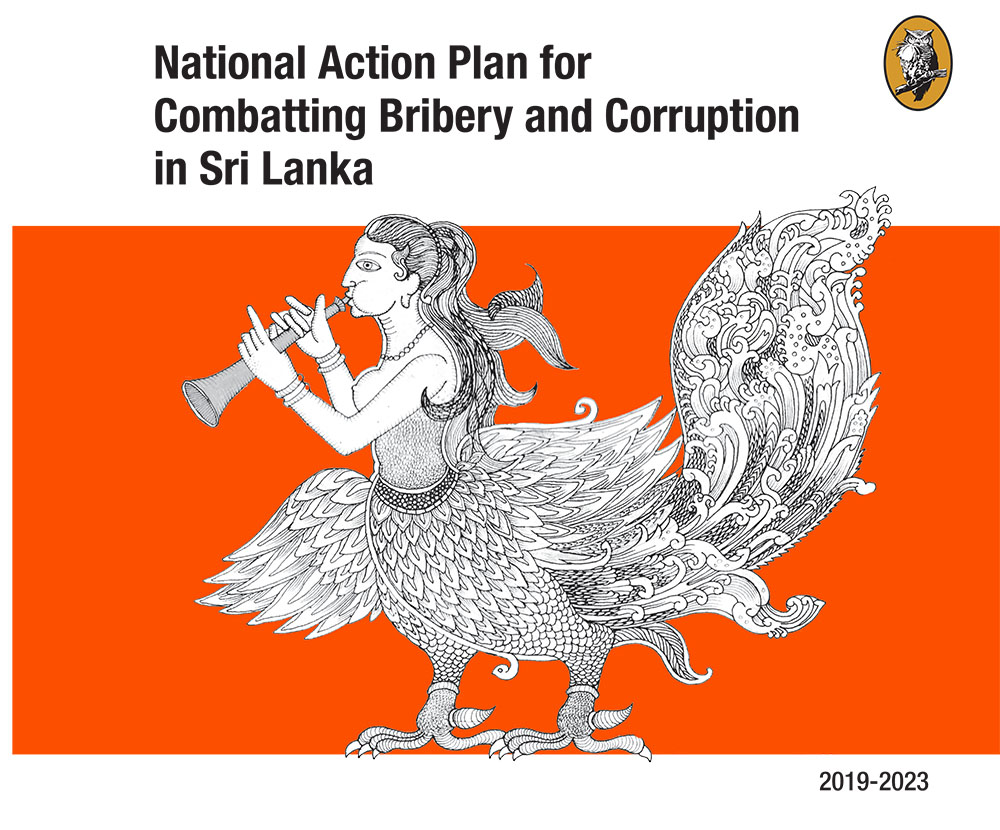
Complaints received by the Commission from 01.01.2024 to 31.03.2024
Received Complaints
Progress Report From 01 January 2024 to 31 March 2024
Three years in Retrospect & The Way Forward (2017 - 2019)
Latest Video
SUBMIT YOUR COMPLAINT
COMMISSION TO INVESTIGATE ALLEGATIONS OF BRIBERY OR CORRUPTION
No 36, Malalasekera Mawatha, Colombo 07, Sri Lanka.
COMMISSION TO INVESTIGATE ALLEGATIONS OF BRIBERY OR CORRUPTION
No 36, Malalasekera Mawatha, Colombo 07, Sri Lanka.